From Fellowship to Frontline Impact

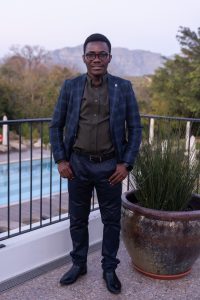
Kabugo’s journey in science began over a decade earlier, with degrees in Biomedical Laboratory Technology and Clinical Immunology from Makerere University. In October 2016, he joined the Uganda National Tuberculosis Reference Laboratory as a laboratory scientist – the start of a career spent inside the country’s central public health laboratory system. He later rose to technical lead of Uganda's National Health Laboratory Diagnostic Services (NHLDS) Technical Working Group on Operational Research and Innovations, in 2023.
What drew him to public health, he says, was a simple but urgent realisation: laboratories are not support functions on the sidelines of disease control – they are the front line. “In Uganda alone, over twenty disease outbreaks have been documented in the last five years, including those caused by emerging and re-emerging infectious agents,” Kabugo explains.
Kabugo’s career had already built the technical foundation, but it was the African STARS Fellowship that gave him the network, the exposure, and – as it would turn out – the timing to make a huge impact during a national emergency. “The fellowship has expanded my network and enabled resource mobilisation," he says. Beyond connecting him to funders and collaborators across the health research landscape, the fellowship immersed him in genomics training and outbreak response modules, sharpening skills he didn't yet know he would need so urgently.
“My placement at CERI positioned me within an institution actively engaged in epidemic and pandemic preparedness and response across the continent,” he says, “giving me visibility into funding mechanisms and partner networks that simply aren't accessible from within a national system alone.” Kabugo learnt of the Ebola outbreak the way public health professionals often do – not through breaking news, but through routine institutional surveillance meetings. From there, distance became both the challenge and, unexpectedly, the advantage.
Coordinating Uganda's emergency needs from South Africa was not simple. "It required me to maintain communication with the team on the ground, which was quite hard," he recalls, “given how stretched key personnel were across emergency meetings and response activities”. Real-time updates were hard to come by. But being at CERI meant Kabugo could see something the team on the ground, buried in the immediacy of the response, could not: a bridge. “This positioning created a quick link to identify CERI as a bridge between NHLDS-MoH's outbreak response needs and potential funders,” he says. Through that connection, CERI convened a resource mobilisation meeting with more than twenty funders – and the ELMA Foundation stepped forward to support the supply of diagnostic testing kits.
With an imported outbreak and a narrowing window to act, Kabugo and his team drew on institutional memory – comparisons to the 2022/2023 Sudan-Ebola outbreak and an audit of current stock levels – to build the needs analysis behind his concept proposal. As the link between CERI's resource-mobilisation efforts and the NHLDS-MoH team on the ground, he translated Kampala's priorities into a case compelling enough to move funders like the ELMA Foundation to act. It was not fast. “Delays were experienced in the acquisition of the grant, and over seven weeks have so far been taken, with shipment expected to happen next week,” Kabugo notes. “Coordination away from the ground is hard, and resourcing delays were a constant worry, since Ebola spreads quickly and any delay could cost lives.”
For Kabugo, this response has sharpened the Technical Working Group’s core purpose and drive to advance focus on pandemics and surveillance of emerging and re-emerging outbreaks. Looking ahead, he's already thinking about what a more proactive posture could look like: routine genomic surveillance of wastewater, a collaborative one-health approach across the region, and – critically – a shift from retrospective planning to real-time operational readiness.
Kabugo also sees this response as a foundation to build on. Real resilience, he says, will come from sustained one-health surveillance across high-risk border districts, additional BSL-3 satellite laboratory capacity, and a steady supply chain for diagnostics and PPE – building the infrastructure to see the next crisis coming, not just respond to it.
However, he feels the collaboration and the links established through this fellowship lay a ground for continued collaboration, including training, consulting consortiums, and sharing of resources in future and current epidemics. “This sets the stage for future response to outbreaks,” he notes.
Looking back, from Makerere lecture halls to a national TB reference laboratory to a fellowship desk in Stellenbosch to a live PHEIC response, Kabugo sees a clear throughline. “The African STARS fellowship placed me at the intersection of applied epidemic science and international partnership-building at precisely the moment Africa needed both,” he says. “It has reinforced my career path bridging laboratory diagnostics, operational research, and health systems strengthening.”
And Kabugo isn't finished yet. He plans to complete his doctoral studies while growing NHLDS’s research and innovation function and deepening the partnerships that made this response possible. As he puts it, his goal is to help “translate African health biotechnology innovations into practical solutions that address patient care challenges across the continent.”
For a fellowship built on the premise that Africa’s brightest scientific minds deserve a global stage and a global network – Kabugo Joel’s story is proof of what’s possible.
By Katrine Anker-Nilssen
News date: 2026-07-27
Links: